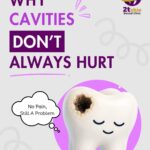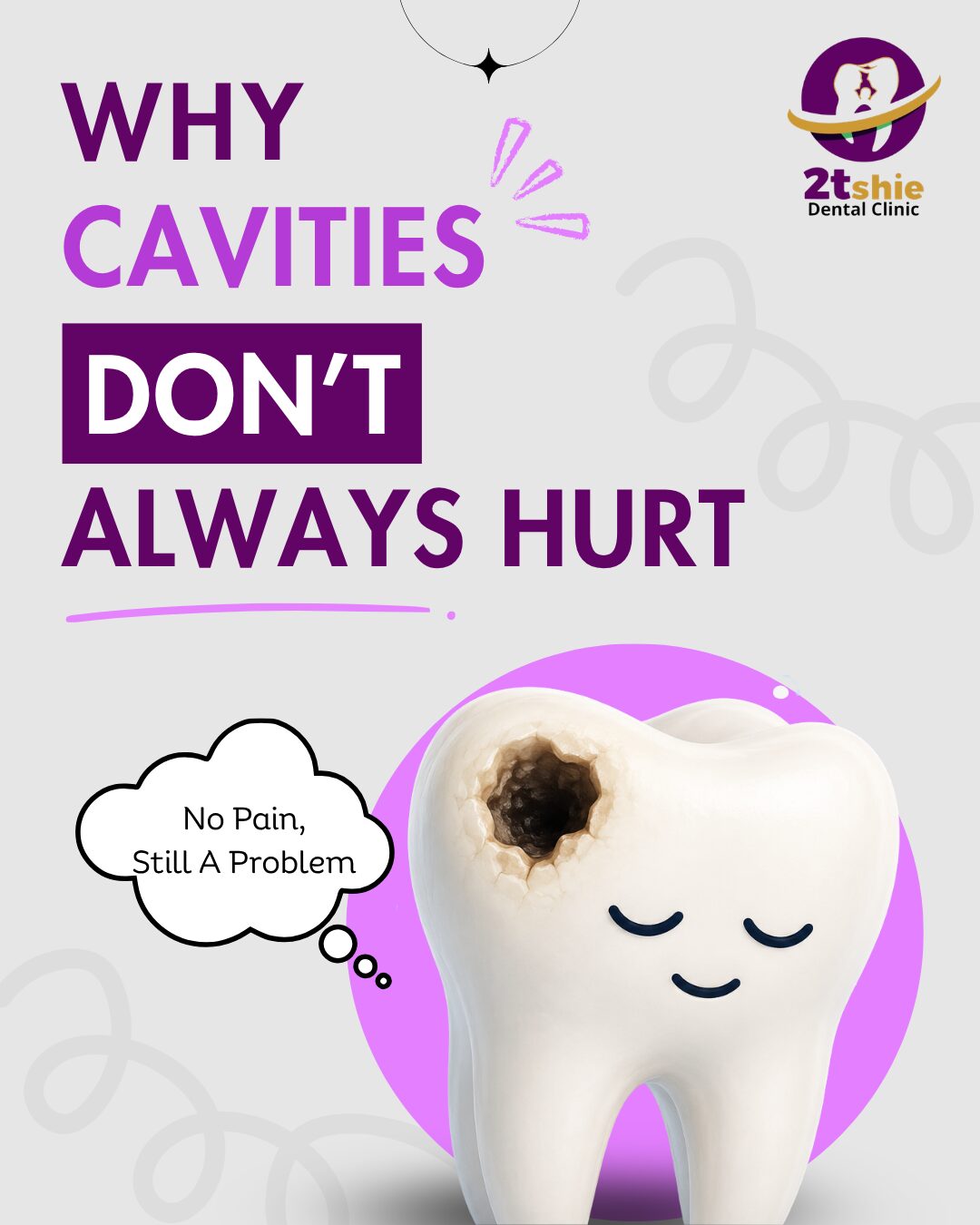
One of the biggest misconceptions about oral health is that if a tooth doesn’t hurt, it must be healthy. Unfortunately, this isn’t always true.
Many cavities develop silently, causing little or no discomfort in their early stages. By the time pain begins, the decay may have already reached the deeper layers of the tooth, requiring more extensive treatment.
Understanding why cavities don’t always hurt can help you detect dental problems earlier, avoid costly procedures, and protect your smile for years to come.
What Is a Cavity?
A cavity, also known as dental caries or tooth decay, is a permanently damaged area in the tooth caused by acids produced by bacteria in dental plaque.
When you eat sugary or starchy foods, bacteria feed on the leftover food particles and produce acids that gradually wear away the tooth’s protective outer layer, known as enamel.
If left untreated, the decay continues to spread deeper into the tooth.
Why Don’t Cavities Hurt at First?
The simple answer is that tooth enamel has no nerves.
Enamel is the hard outer covering of your teeth. Because it contains no nerve endings, early damage to the enamel usually causes no pain.
You may have a developing cavity without noticing any symptoms at all.
This is why routine dental examinations are so important—they can detect decay before you feel it.
The Stages of Tooth Decay
Understanding how tooth decay progresses explains why pain often appears late.
Stage 1: Enamel Demineralization
Acids begin removing minerals from the enamel.
You may notice:
- White spots on the tooth
- No pain
- No sensitivity
At this stage, early intervention may even reverse the damage through fluoride treatment and improved oral hygiene.
Stage 2: Enamel Cavity Formation
As the enamel continues to weaken, a small cavity forms.
Common symptoms include:
- Usually no pain
- Mild sensitivity to sweets
- Tiny dark or brown spots
Many people are unaware they have a cavity during this stage.
Stage 3: Decay Reaches the Dentin
Beneath the enamel lies the dentin, which contains microscopic channels connected to the tooth’s nerve.
Once decay reaches the dentin, you may begin to experience:
- Tooth sensitivity
- Mild discomfort
- Pain when eating sweets
- Sensitivity to hot or cold foods
At this point, a dental filling is often needed to restore the tooth.
Stage 4: Infection Reaches the Pulp
The pulp is the innermost part of the tooth and contains nerves and blood vessels.
When bacteria reach the pulp, symptoms may include:
- Severe toothache
- Persistent throbbing pain
- Swelling
- Pain when chewing
- Difficulty sleeping because of tooth pain
Treatment may require a root canal or, in severe cases, tooth extraction.
Signs You May Have a Cavity Even Without Pain
Not all cavities cause obvious discomfort.
Watch for these early warning signs:
- White, brown, or black spots on your teeth
- Food frequently getting stuck in the same area
- Mild sensitivity to sweets
- A rough or uneven tooth surface
- Bad breath
- Visible holes or pits in a tooth
If you notice any of these symptoms, schedule a dental examination promptly.
Why Waiting for Pain Can Be Costly
Many people delay visiting the dentist because they believe no pain means no problem.
Unfortunately, this often allows the cavity to grow larger.
Here’s how treatment may change over time:
| Early Detection | Delayed Treatment |
| Fluoride treatment | Root canal therapy |
| Small filling | Dental crown |
| Quick appointment | Tooth extraction |
| Lower cost | Higher treatment cost |
Early treatment is almost always simpler, faster, and more affordable.
How Dentists Detect Hidden Cavities
Your dentist doesn’t rely on pain alone to diagnose tooth decay.
A routine dental examination may include:
- Visual inspection of your teeth
- Dental X-rays
- Checking for soft areas in the enamel
- Assessing existing fillings and restorations
These methods help identify cavities before they become painful.
How to Prevent Cavities
Preventing cavities is much easier than treating them.
Follow these simple habits:
Brush Twice a Day
Use fluoride toothpaste and brush for at least two minutes.
Floss Daily
Floss removes plaque and food particles between the teeth where a toothbrush cannot reach.
Reduce Sugary Foods and Drinks
Frequent sugar consumption increases acid attacks on your teeth.
Drink Plenty of Water
Water helps wash away food particles and supports healthy saliva production.
Visit Your Dentist Every Six Months
Routine dental checkups allow problems to be detected early—even before you notice symptoms.
When Should You See a Dentist?
Book an appointment if you notice:
- Tooth sensitivity
- Dark spots on a tooth
- A chipped or broken tooth
- Food trapping in one area
- Persistent bad breath
- Tooth pain of any kind
Remember, you don’t have to wait until your tooth hurts.
Frequently Asked Questions
Can You Have a Cavity Without Pain?
Yes. Many cavities cause no pain until the decay reaches the deeper layers of the tooth.
Can Small Cavities Heal on Their Own?
Very early enamel damage may be reversed with fluoride and excellent oral hygiene. However, once a cavity forms, it will not heal on its own and requires professional treatment.
Is It Safe to Wait Until My Tooth Hurts?
No. Waiting for pain often means the cavity has become more advanced, leading to more complex and expensive treatment.
Final Thoughts
A cavity doesn’t have to hurt to be serious. In fact, many cavities remain painless while silently damaging your teeth.
By the time discomfort begins, the decay may have already spread deep into the tooth.
The best way to protect your smile is through good oral hygiene and regular dental checkups. Early detection allows your dentist to treat cavities before they become painful—and before they require more extensive procedures.
Don’t wait for pain to tell you something is wrong. Let prevention work in your favour.
Protect Your Smile with Regular Dental Checkups
At our dental clinic, we believe that prevention is the key to lifelong oral health. Our comprehensive dental examinations can detect cavities early, helping you avoid unnecessary pain and costly treatments.
Schedule your routine dental checkup today and keep your smile healthy, strong, and cavity-free.