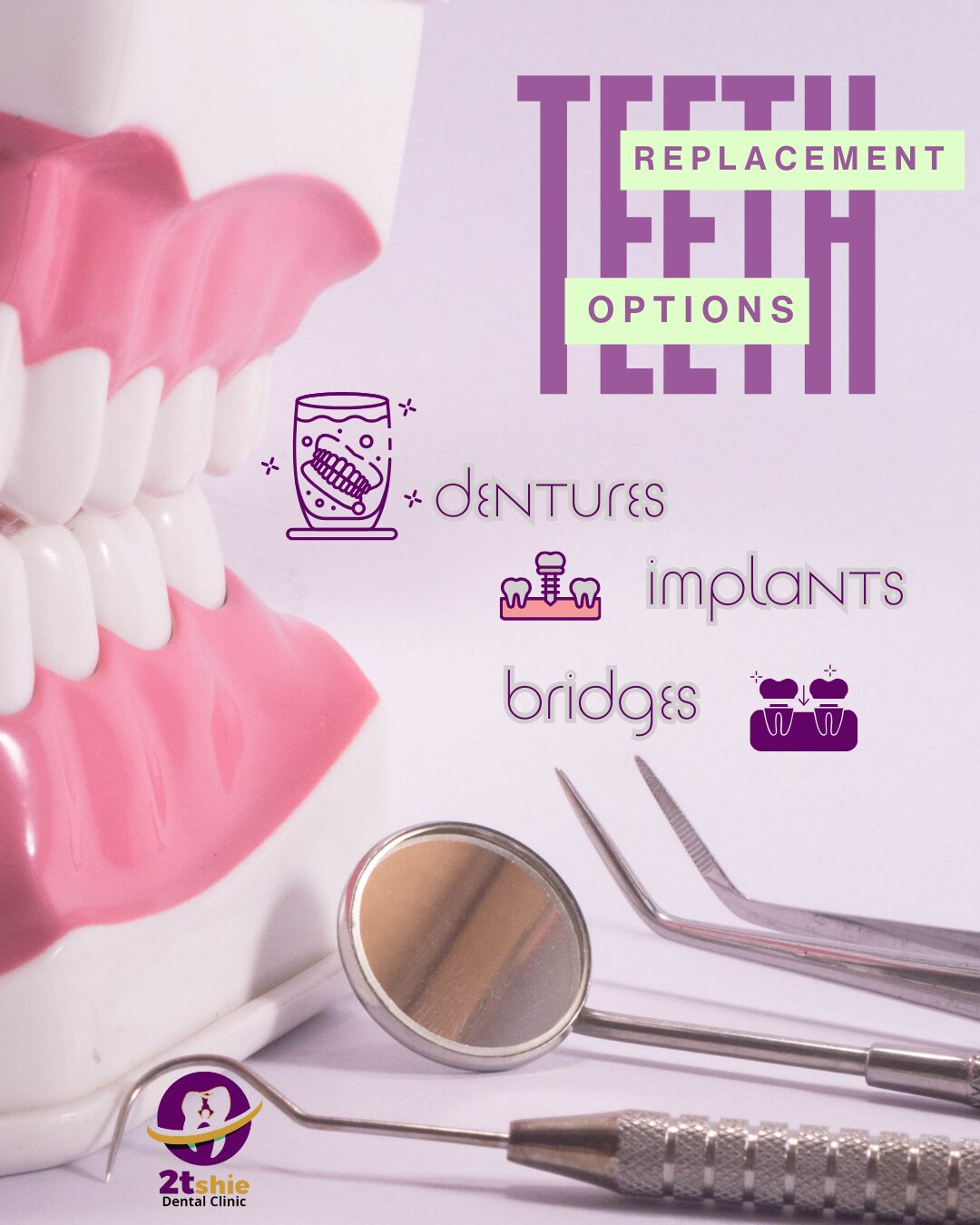
Tooth loss is more common than you might think. Whether due to decay, gum disease, or injury, replacing missing teeth is essential for maintaining oral health, facial structure, and confidence. Today, patients have three popular options: dentures, dental implants, and dental bridges.
But which one is best for you? Let’s break down the differences, pros, and cons so you can make an informed decision.
What Are Dentures?
Dentures are removable appliances designed to replace missing teeth. They can be full dentures (for an entire arch of teeth) or partial dentures (for a few missing teeth).
Advantages of Dentures:
- More affordable than implants or bridges.
- Can replace multiple teeth or full arches at once.
- Non-invasive (no surgery required).
Disadvantages of Dentures:
- May slip or feel uncomfortable if not fitted well.
- Require daily removal and cleaning.
- Do not prevent bone loss in the jaw.
What Are Dental Implants?
Dental implants are titanium posts surgically placed into the jawbone, acting as artificial tooth roots. A crown is then attached to create a natural-looking replacement tooth.
Advantages of Implants:
- Look, feel, and function like natural teeth.
- Long-lasting (can last decades with proper care).
- Prevent jawbone loss by stimulating the bone.
- No need to affect neighboring teeth.
Disadvantages of Implants:
- Requires surgery and healing time.
- Not suitable for patients with low bone density (unless bone grafting is done).
What Are Dental Bridges?
Dental bridges are fixed restorations that “bridge” the gap created by one or more missing teeth. They are anchored to adjacent natural teeth or implants.
Advantages of Bridges:
- Fixed in place—no removal required.
- Faster treatment compared to implants.
Disadvantages of Bridges:
- Requires filing down healthy neighboring teeth for support.
- Do not prevent bone loss under the missing tooth.
- May need replacement after 10–15 years.
Comparing Dentures, Implants, and Bridges
| Feature | Dentures | Implants | Bridges |
| Appearance | Natural but removable | Most natural look & feel | Natural, but depends on support teeth |
| Durability | 5–10 years | 20+ years | 10–15 years |
| Bone Preservation | No | Yes | No |
| Comfort | Can shift | Feels like natural teeth | Fixed but may stress nearby teeth |
| Maintenance | Remove & clean daily | Brush & floss like natural teeth | Brush & floss with special tools |
5. Which Option Is Right for You?
- Choose Dentures if you want the most affordable and non-surgical option.
- Choose Implants if you want the longest-lasting, most natural solution and are healthy enough for surgery.
- Choose Bridges if you’re missing a few teeth and want a fixed option without the higher cost of implants.
In choosing a treatment the dentist will evaluate your oral health, bone density, budget, and lifestyle before recommending the best choice.
Conclusion
When it comes to dentures vs. implants vs. bridges, there is no one-size-fits-all solution. Dentures are cost-friendly, implants offer unmatched durability, and bridges provide a reliable middle ground.
The best step is to consult your dentist—they can guide you toward the solution that restores your smile, improves function, and fits your lifestyle.