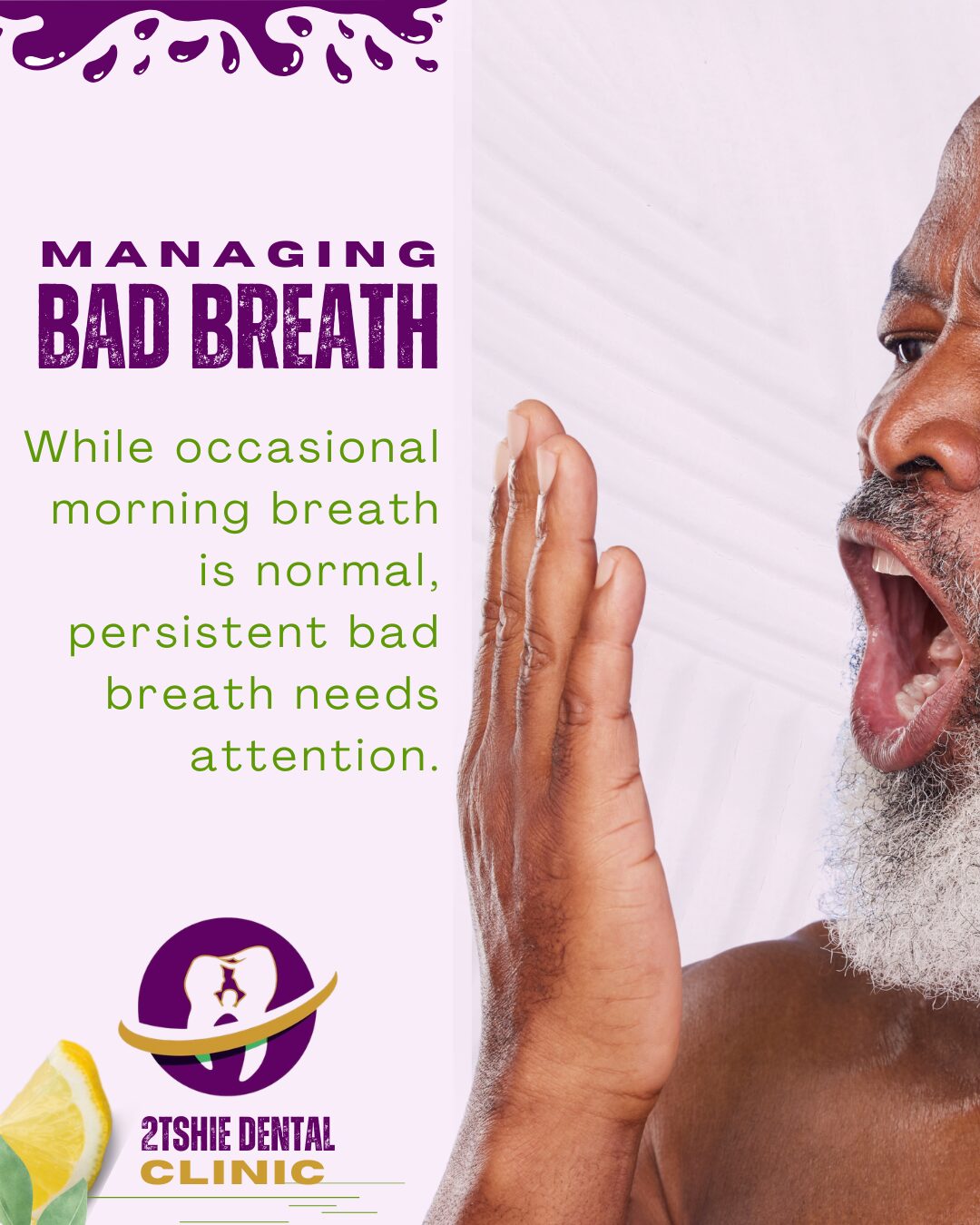
Bad breath, also called halitosis, is more than just an embarrassing problem — it can be a sign of underlying oral or health issues. While occasional morning breath is normal, persistent bad breath needs attention. The good news? Once you understand the causes, you can find real, lasting solutions.
In this article, we’ll break down why bad breath happens, common myths, and effective ways to keep your breath fresh all day.
What Causes Bad Breath?
Bad breath can stem from oral hygiene habits, diet, or medical conditions. The most common causes include:
- Poor Oral Hygiene
When food particles remain in your mouth, bacteria break them down, releasing foul-smelling sulfur compounds. - Gum Disease
Bacterial buildup in infected gums can create persistent odor. - Dry Mouth (Xerostomia)
Saliva helps cleanse your mouth. A lack of saliva (often from dehydration, medications, or mouth breathing) allows odor-causing bacteria to thrive. - Certain Foods and Drinks
Garlic, onions, coffee, and alcohol can cause temporary bad breath. - Smoking and Tobacco Use
These not only leave an odor but also increase the risk of gum disease. - Medical Conditions
Respiratory infections, diabetes, acid reflux, and liver or kidney issues can contribute to bad breath.
Myths About Bad Breath
- Myth: Mouthwash always fixes bad breath.
Truth: Mouthwash may mask odor temporarily but won’t solve the root cause. - Myth: If you can’t smell your breath, it’s fine.
Truth: People often adapt to their own scent and may not notice it. - Myth: Bad breath is only about food.
Truth: Poor oral hygiene and health conditions are more common causes.
Real Fixes for Bad Breath
1. Practice Excellent Oral Hygiene
- Brush at least twice a day with fluoride toothpaste.
- Don’t forget to use a tongue scraper for your tongue; bacteria often accumulate there.
- Floss daily to remove food particles between teeth.
2. Stay Hydrated
Drink water regularly to keep your mouth moist and encourage saliva production.
3. Address Gum Problems Early
Visit your dentist for a professional cleaning if you have bleeding gums, swelling, or tenderness.
4. Limit Odor-Causing Foods
Moderate garlic, onions, and strong-smelling spices if you have an important meeting or date.
5. Quit Smoking
Stopping tobacco use improves oral health, freshens breath, and reduces gum disease risk.
6. Use Sugar-Free Gum or Mints
Chewing sugar-free gum stimulates saliva and helps neutralize bad odors.
7. See Your Dentist Regularly
A professional check-up every six months helps detect and address causes before they worsen.
When to Seek Medical Advice
If your bad breath persists despite good oral hygiene, it may indicate an underlying medical condition. Speak with your dentist or doctor to investigate further.
Key Takeaway
Bad breath is common but fixable. By addressing the root causes you can enjoy fresh breath and better oral health. Remember: a clean mouth is a confident mouth.