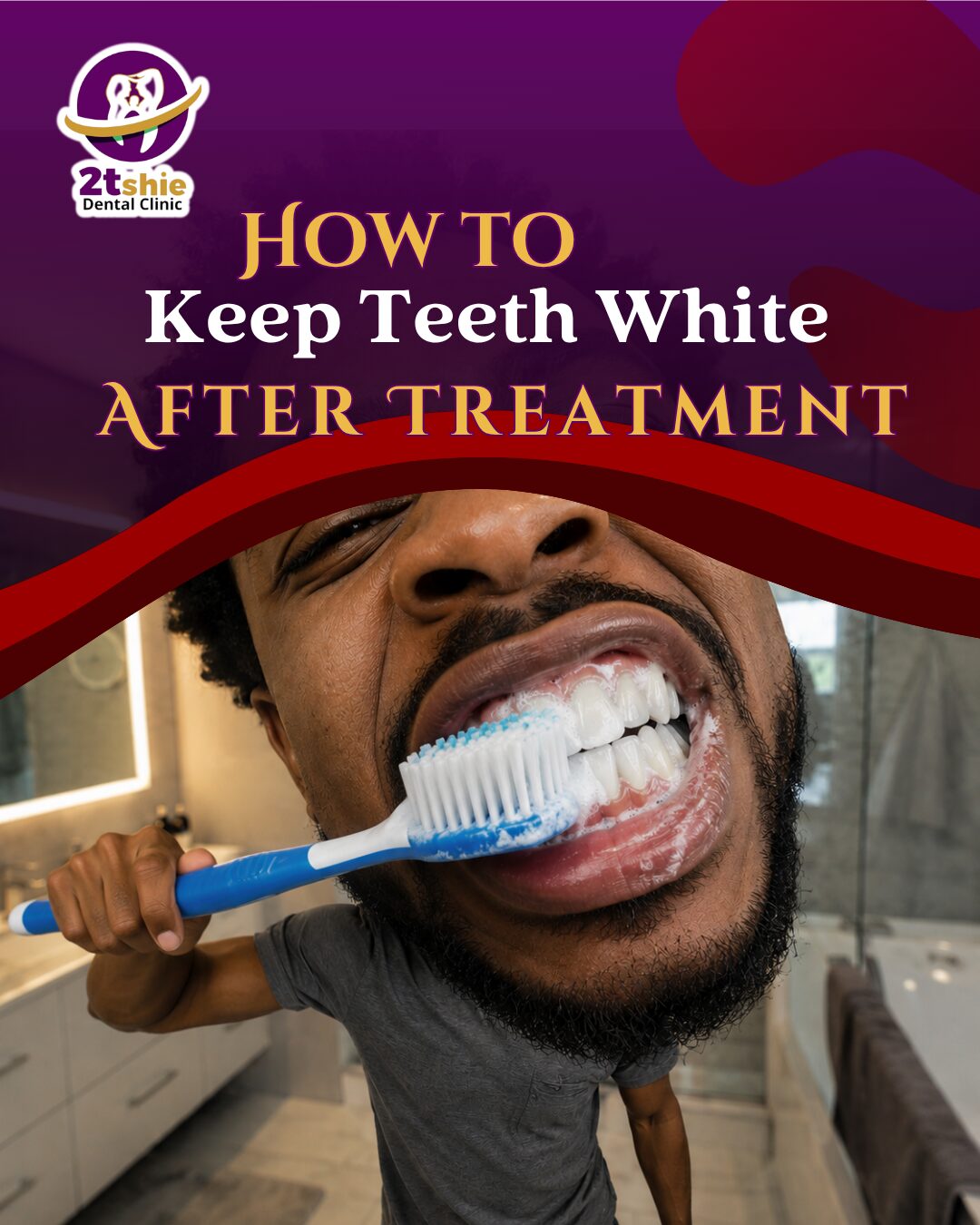
Teeth whitening can dramatically improve your smile and boost your confidence. However, many people notice that their teeth gradually become stained again after treatment.
The good news is that whitening results can last much longer with proper care. Your daily habits, diet, and oral hygiene routine all play a major role in maintaining a bright smile.
In this article, we share practical tips on how to keep your teeth white after treatment and prevent new stains from developing.
Why Teeth Become Stained Again After Whitening
Even after professional whitening, your teeth are still exposed to foods, drinks, and habits that can cause discoloration.
Common Causes of New Stains Include:
- Coffee and tea
- Red wine
- Soft drinks
- Smoking or tobacco use
- Poor oral hygiene
- Certain foods with strong coloring
Whitening removes stains, but it does not make teeth stain-proof.
1. Avoid Staining Foods and Drinks
The first 48 hours after whitening are especially important because teeth are more vulnerable to stains during this period.
Foods and Drinks to Limit:
- Coffee
- Tea
- Cola and dark soft drinks
- Red wine
- Curry
- Soy sauce
- Dark berries
- Kolanut
Helpful Tip:
If you consume staining drinks, use a straw when possible to reduce contact with your teeth.
2. Brush Your Teeth Twice Daily
Good oral hygiene helps prevent plaque and surface stains from building up.
Best Practices:
- Brush morning and night
- Use fluoride toothpaste
- Brush for at least two minutes
- Replace your toothbrush every 3 months
A whitening toothpaste may also help maintain brightness, but it should be used carefully to avoid enamel wear.
3. Floss Every Day
Plaque and stains can accumulate between the teeth where brushing cannot reach.
Benefits of Flossing:
- Removes trapped food particles
- Reduces plaque buildup
- Keeps your smile cleaner and brighter
Daily flossing is essential for maintaining whitening results.
4. Stop Smoking or Tobacco Use
Smoking is one of the fastest ways to stain teeth after whitening treatment.
- Yellow or brown stains
- Bad breath
- Gum disease
- Faster discoloration
Quitting smoking helps preserve your whitening results and improves your oral health overall.
5. Rinse Your Mouth After Meals
Rinsing with water after eating or drinking helps wash away pigments and acids before they settle on your teeth.
This simple habit can make a significant difference over time.
6. Schedule Regular Dental Cleanings
Professional scaling and polishing help remove surface stains and tartar buildup.
Benefits of Routine Cleaning:
- Keeps teeth brighter
- Removes plaque and tartar
- Maintains healthy gums
- Helps whitening last longer
Dentists generally recommend cleaning every 6 months.
7. Drink More Water
Water naturally helps clean the mouth and reduce staining.
Why Water Helps:
- Washes away food particles
- Dilutes acids and pigments
- Encourages saliva production
Staying hydrated supports both oral and general health.
8. Use Whitening Touch-Up Treatments When Needed
Over time, some fading is normal.
Your dentist may recommend:
- Touch-up whitening sessions
- Take-home whitening trays
- Whitening toothpaste or gels
Professional guidance ensures safe maintenance without damaging enamel.
9. Eat Foods That Help Clean Teeth Naturally
Certain crunchy foods help reduce surface buildup.
Helpful Foods Include:
- Apples
- Carrots
- Celery
- Cucumbers
These foods stimulate saliva and help clean the teeth naturally.
10. Avoid Excessive Use of Whitening Products
Using whitening products too frequently can increase sensitivity and weaken enamel.
Always follow your dentist’s instructions and avoid over-whitening.
How Long Does Teeth Whitening Last?
Whitening results vary depending on lifestyle and oral care habits.
Average Whitening Duration:
- Professional whitening: 6 months to 3 years
- With excellent maintenance: even longer
Patients who avoid staining habits generally enjoy longer-lasting results.
When Should You See a Dentist?
Visit your dentist if:
- Your teeth are becoming stained again quickly
- You experience tooth sensitivity
- Whitening products are not working
- You want professional maintenance treatment
Final Thoughts
Teeth whitening is an excellent way to improve your smile, but maintenance is essential for long-lasting results.
Simple habits like brushing properly, avoiding tobacco, limiting staining foods, and visiting your dentist regularly can help keep your smile bright and healthy.
Keep Your Smile Bright
At our dental clinic, we offer professional teeth whitening, cleaning, and maintenance treatments to help you enjoy long-lasting results.
Book your appointment today and keep your smile looking its best.